
You have no doubt heard about personas. But who are they? What are they for? The web, product design, and marketing more broadly have all shifted in recent years towards a “user-centred” approach. That is where personas come in.
WHAT IS A PERSONA?
We could define personas as typical users (the famous archetypes) — fictional representations of target users. They are used to set priorities and guide decisions in interface or product design. Each persona is based on a fictional character whose characteristics are drawn from a real social group. A persona is the result of investigation and research work.
WHO USES PERSONAS?
Today, personas are used everywhere — in UX design (user experience) of course, but also in marketing, communications, customer service, development teams, and SEO. They are often pinned up in offices so that at every moment everyone is thinking “user first” and what would best serve them. It is far easier to talk about a user when they have a name and a face.
WHAT DOES A PERSONA LOOK LIKE?
Rather like an identity card for your ideal customer, personas have a photo and very often a quote to make them as human as possible. No information is mandatory — everything depends on the project. Personas can take different forms, often quite visual. In general, they are highly concise while containing a great deal of information.
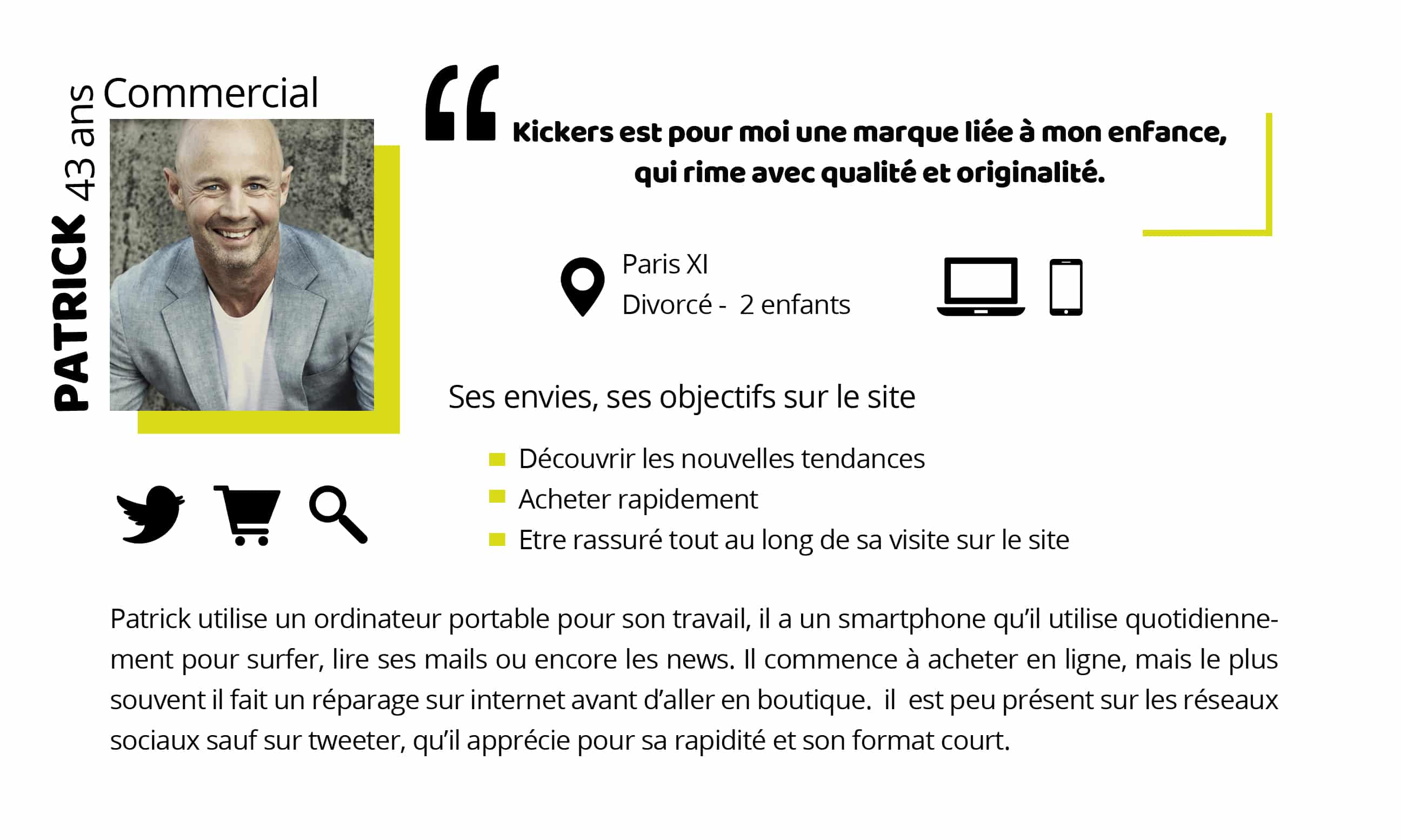
The first example is a persona created for a website redesign. During the project we created several personas to represent the client’s different target groups. Throughout the design process, we knew we needed multiple reading levels because the personas had very different levels of technical knowledge. For example, a marketing manager at an SME needs answers in clear, non-technical language.
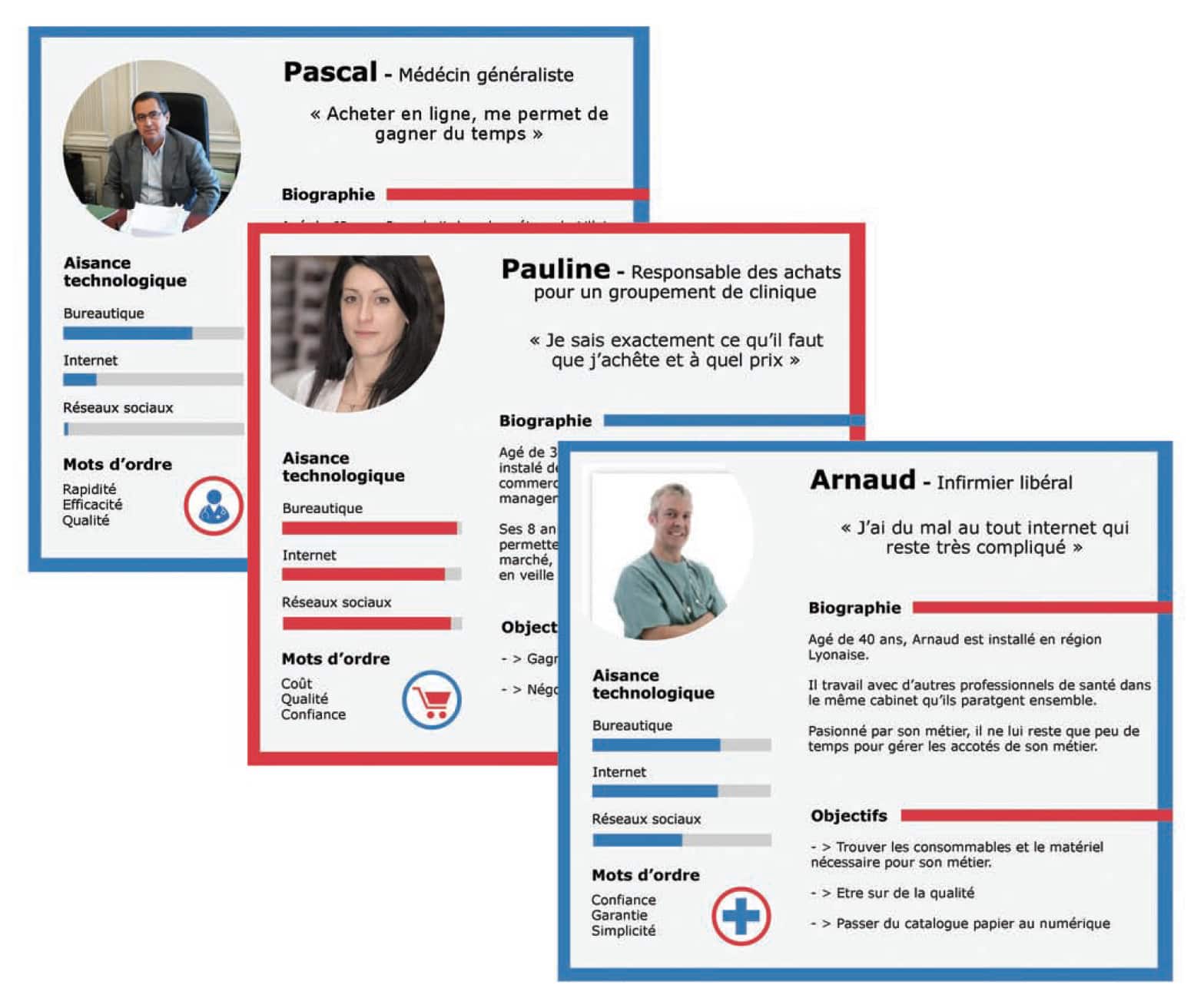
These other personas were created as part of a project proposal for an e-commerce site in the medical sector. Very different target segments led to these personas, each with their own distinct expectations of an e-commerce experience.
HAVE YOU CREATED YOUR PERSONAS?
You now know how important personas are in guiding the design of your interfaces or products. If you are launching a project and need personas, beware of the most common trap: building personas based on your assumptions alone. It is essential to build personas on the basis of a detailed analysis of your target audience — not simply on hypotheses. A persona is not a trend — it is a vital tool for the success of your project.
Let’s discuss your situation.
30 minutes, no obligation.
Let’s take a look together at what it would take to ease your IT workload. No sales pitch. Just an honest assessment of the situation.
Your IT architect. Your trusted partner.