
The web today bears no resemblance to its early days. A rapid and constant evolution of web standards, technical constraints, improved understanding of user needs, evolving designs, changes in how web services are used… It is easy to feel overwhelmed by the pace of change.
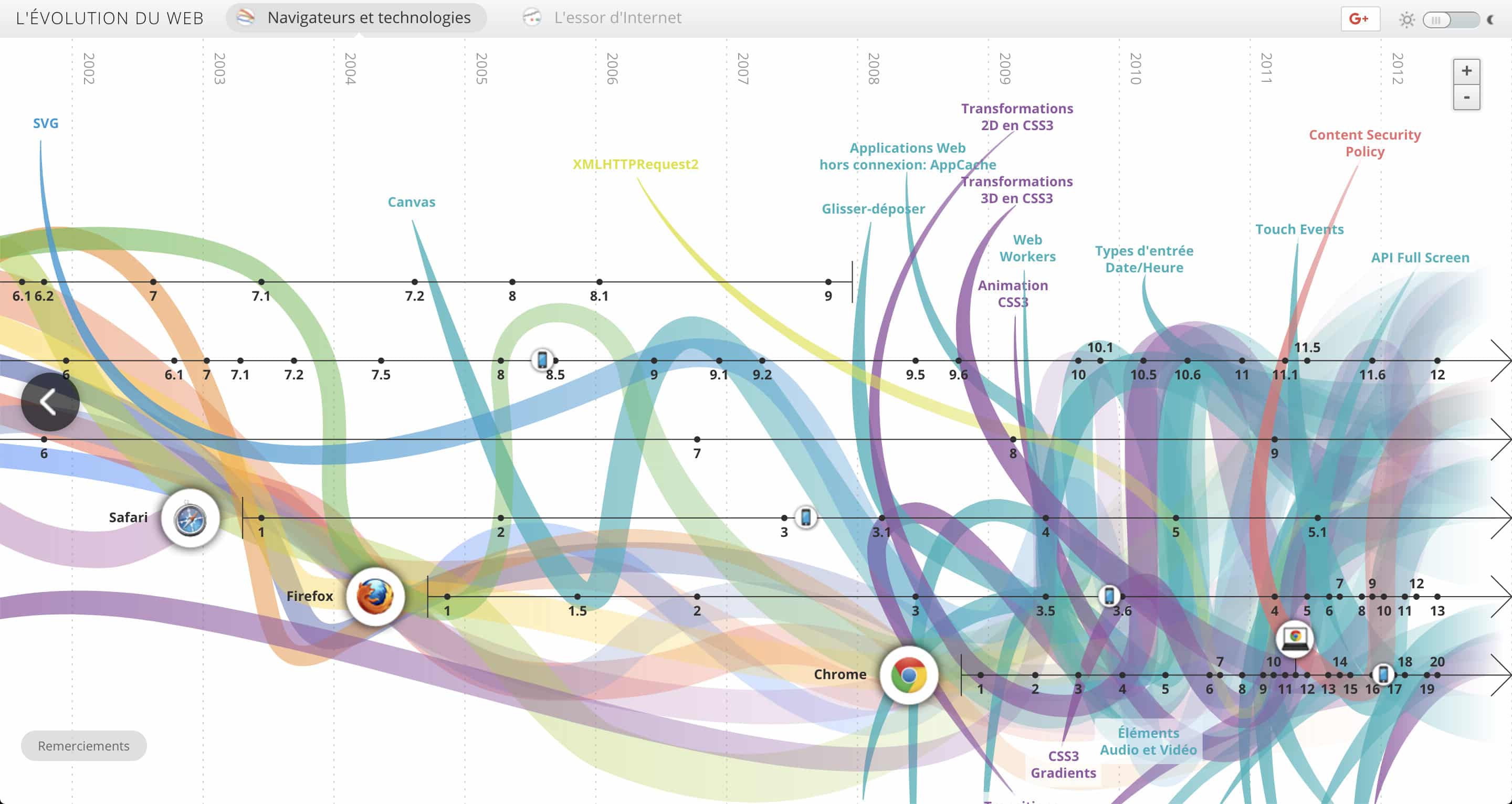
And you — where do you stand? Have you kept pace? Has your site adapted to all these changes?
If the answer is no, it may be time to think about a website redesign.
WHAT DO WE MEAN BY A REDESIGN?
We talk about a site redesign when it needs:
- a visual refresh
- a restructuring of the site
- the addition of new features
Depending on your objectives and the current state of your site, the redesign will be more or less extensive. It is essential to start with a thorough audit of your site and your digital strategy, to identify the strengths to keep and the areas to work on. A redesign does not necessarily mean wiping the slate clean. In many cases, it builds on what already exists to evolve it in a positive direction.
DOES MY SITE REALLY NEED A REDESIGN?
Your website may be somewhat dated without that necessarily meaning you need to start from scratch.
Here are some questions to ask yourself before embarking on a redesign.
Has your visual identity evolved while your site’s graphic design has not? Or does your site look dated and no longer reflect your business?
Answer NO: Keep an eye on your competitors — if they are evolving quickly, you need to stay vigilant. In this case, a full redesign may not be necessary, but continuous improvement of your site would be an excellent step.
Answer YES: It is time to think about a redesign.
It is important for your image to maintain consistency between your print communications (posters, flyers, business cards, etc.) and your website. Furthermore, a site that is several years old can appear outdated and may no longer inspire confidence.
Is your site responsive? Does it adapt to tablets? To smartphones?
Answer NO: A redesign is urgent.
Between 2015 and 2018, mobile traffic grew by 89%.
Answer YES: Great! Next question.
Is your website meeting your return on investment objectives (no clients, no leads…)?
Answer NO: Several factors may explain why your site is not performing as expected. A thorough audit will help you pinpoint the issues and address them.
Answer YES: Great! Keep monitoring your site’s performance and remember to publish new content regularly.
Is your website properly indexed by search engines?
Answer NO: Your future customers cannot find your site. Without necessarily resorting to a full redesign, you need to review your SEO strategy to remove the blocking factors. An SEO audit will highlight the areas for improvement and tell you whether a full redesign is needed.
Answer YES: You are easy to find online — keep working on your organic SEO with regularly updated content to maintain your search ranking.
Are your users converting? Are your visitors spending enough time on your site to discover your content?
Answer NO: User experience, personas, user journeys? If these terms don’t mean much to you, today it is essential that the user is at the centre of the design in order to convert effectively. A redesign must take into account all aspects of your users’ needs. Make it easy for them to find relevant information, get in touch, or sign up to your newsletter.
Answer YES: Stay attuned to your users to keep perfectly meeting their needs.
Do you need to integrate new features?
Answer NO: No need to consider a redesign for now.
Answer YES: Depending on how your site was built, integrating new features may be more or less straightforward. It all depends on the architecture and how the site was conceived at the outset.
DO YOU NEED A REDESIGN?
You now know whether or not your site needs one, and how urgently. But remember — a redesign requires preparation. It would be a shame to lose well-indexed pages or regular users in the process.
If there is one thing to take away about redesigning a site, it is this: it is essential to begin with a thorough audit of your site to capitalise on your strengths and prioritise your development axes in order to achieve your objectives.
Let’s discuss your situation.
30 minutes, no obligation.
Let’s take a look together at what it would take to ease your IT workload. No sales pitch. Just an honest assessment of the situation.
Your IT architect. Your trusted partner.